For the Folwell family of potters, hailing from Kha’po Owingeh (Santa Clara Pueblo), pottery is more than an art form—it’s a cherished vessel they trust to hold their history, heritage and identity. Across generations, as each member’s hands have joined in molding clay, they’ve not only sculpted exquisite pottery, they’ve played essential roles in shaping the contours of the family’s celebrated legacy.
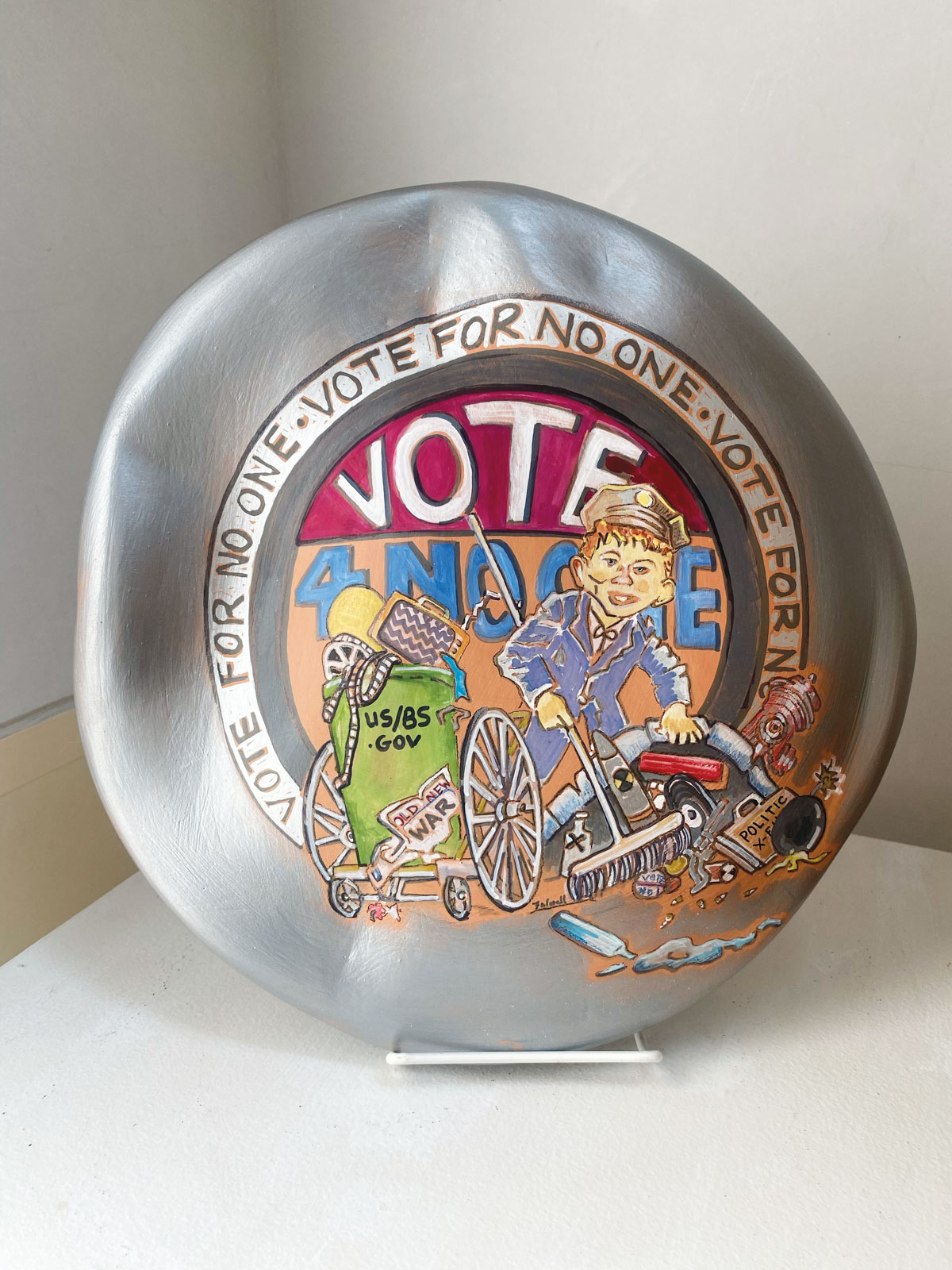 Susan Folwell (Santa Clara Pueblo), Vote for No One, clay, acrylic paint, 12½”
In recognition of the Folwells’ time-honored, ongoing devotion to their craft, the Smithsonian-affiliated Booth Western Art Museum in Cartersville, Georgia, is unveiling The Folwell Family: 5 Generations of Potters, opening June 22 and running through October 20. This expansive showcase marks a historic milestone for the Booth Museum, serving as its first display devoted exclusively to Native American pottery. The four-month-long event serves as a compelling introduction to the world of pueblo pottery, and an in-depth exploration of the masterful, multi-faceted craftsmanship of the Folwell family.
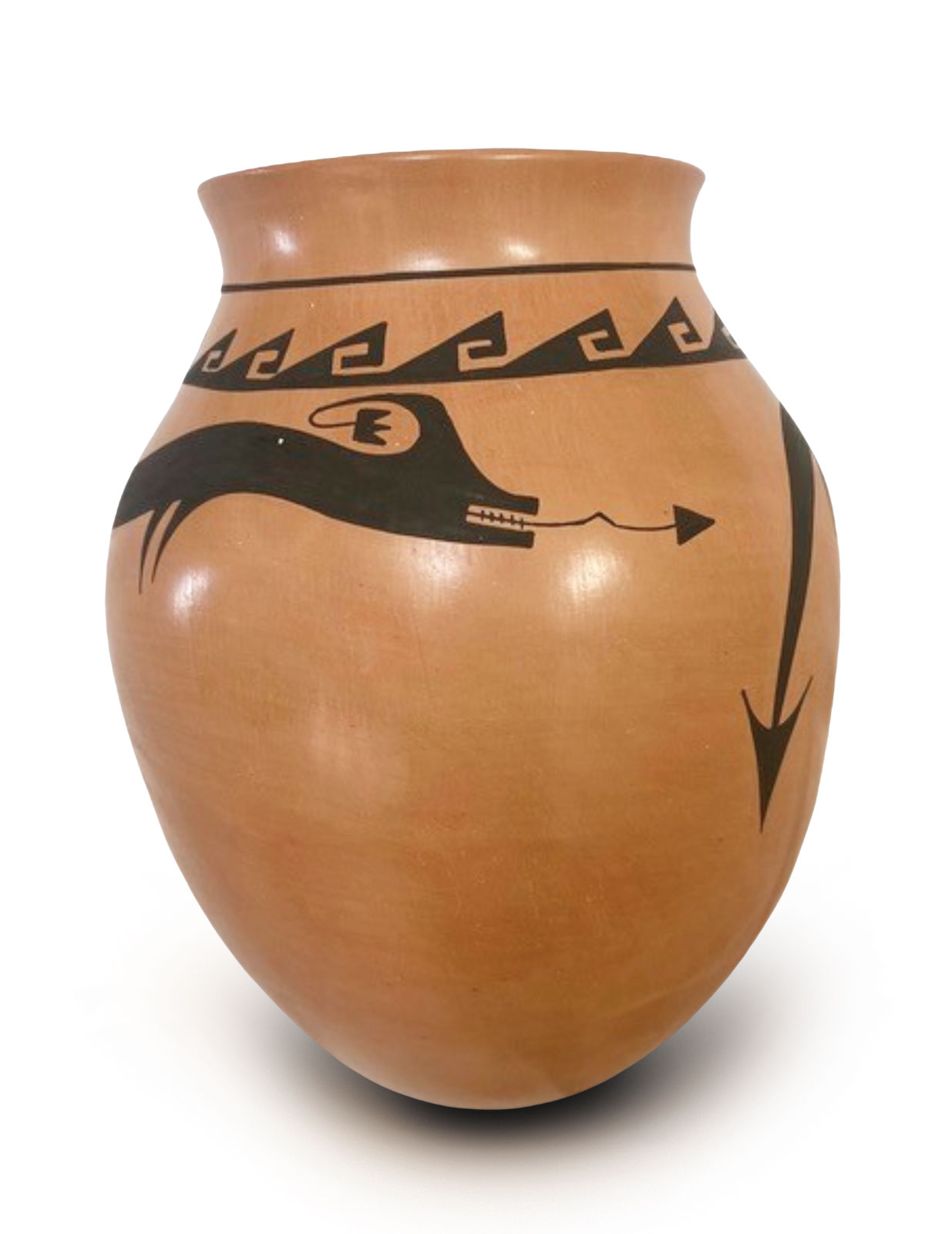 Jody Folwell (Santa Clara Pueblo), Avanyu, clay, 13 x 9½”
“The collection will be centered around pieces made by my grandmother Rose Naranjo and my mother Jody Folwell,” explains Susan Folwell, who is well known for her innovative painted pots and ceramic sculptures. “My sister Polly Rose and I will also be bringing work, as will Polly’s daughter Kaa, and Kaa’s eldest son Tonka, who is 12 years old…I’m excited to see all the pieces gathered together, particularly my grandmother’s work. It feels as though she’s alive in some way if we’re all together.”
The collection was curated entirely by the Folwell family themselves—a fact that Booth Museum executive director Seth Hopkins openly acknowledges.
“We gave the Folwells a free hand in selecting pieces for the exhibition,” he explains. “We encouraged them to select the pieces that best represent their family’s work and heritage. After all, their expertise surpasses ours. This is a learning opportunity for the museum staff as well as our visitors.”
“We’re fortunate that the Booth Museum is so dedicated to promoting education,” Susan recognizes. “Teaching people about pueblo pottery is as important as the work itself.”
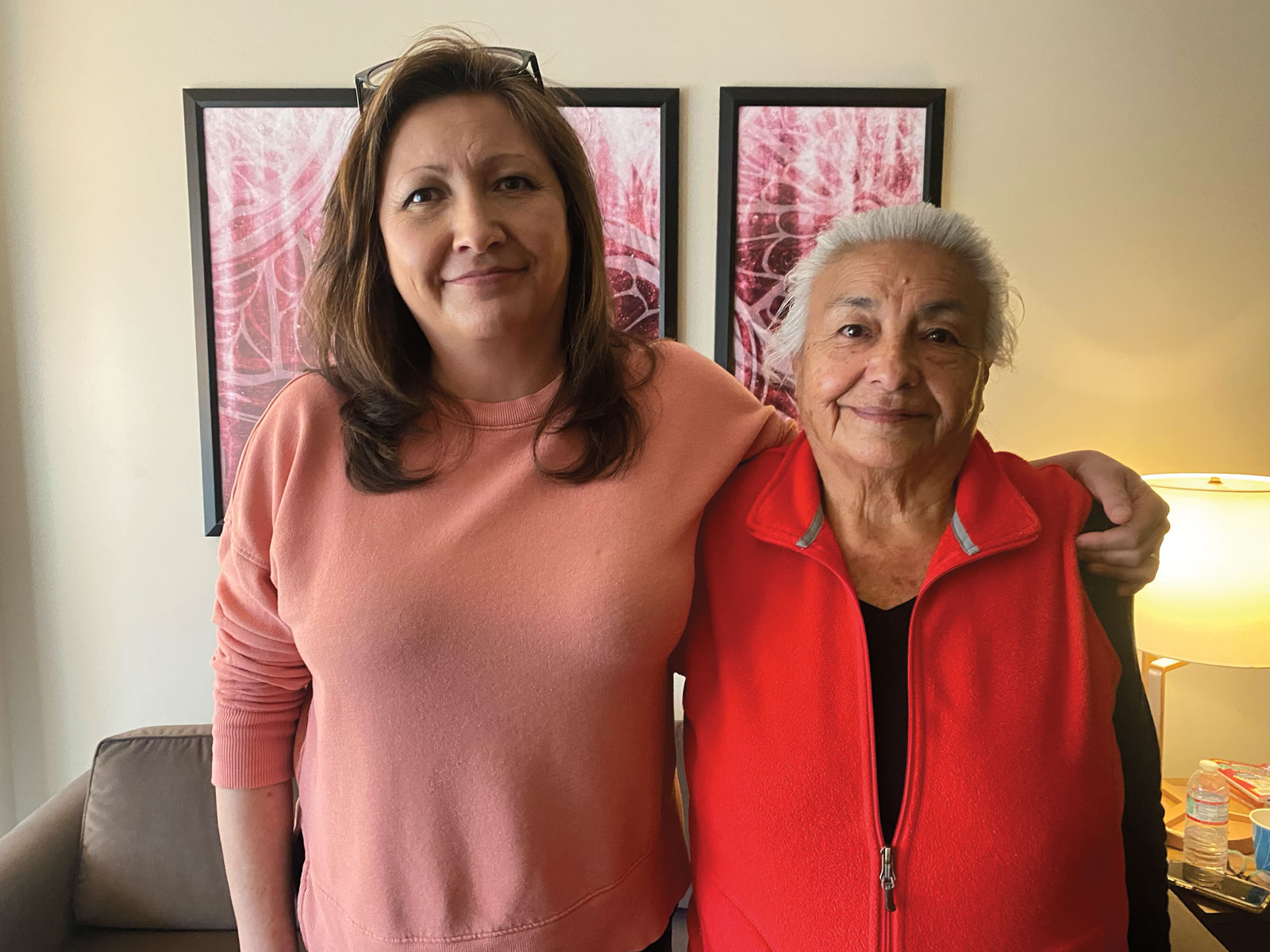 Susan Folwell, left, and Jody Folwell.
The scope of the display is ambitious, and gathering the showcase has been no small feat. In addition to the new pieces the family is collaborating on specifically for the show, they’ve also arranged to borrow pots from private collections across the country, including a number of Rose Naranjo’s pieces that sold decades ago.
“It’s a pretty hefty show, with between 30 to 40 pieces,” Susan remarks. “Attendees will get a very broad view of our family pottery’s ongoing evolution.”
“We’re working on finding all the pedestals we’ll need for the exhibition,” Seth Hopkins says with a laugh. “We’ve wanted to have a presentation dedicated to pueblo pottery for a long time, and this is everything we’ve hoped for and more.”
The keystone of this generation-bridging exhibition is decidedly Jody Folwell, the current matriarch of the Folwell family. Internationally renowned not only as a ground-breaking pueblo potter but also as an accomplished American impressionist artist, Jody has rightfully earned her status as a living legend.
“Jody Folwell is one of the most successful experimental potters in contemporary times,” commends Seth Hopkins. “To display work by her, her mother, her daughters and the younger generation of the Folwell family—to show where their family’s pottery has been and where it’s headed—is simply a priceless opportunity.”
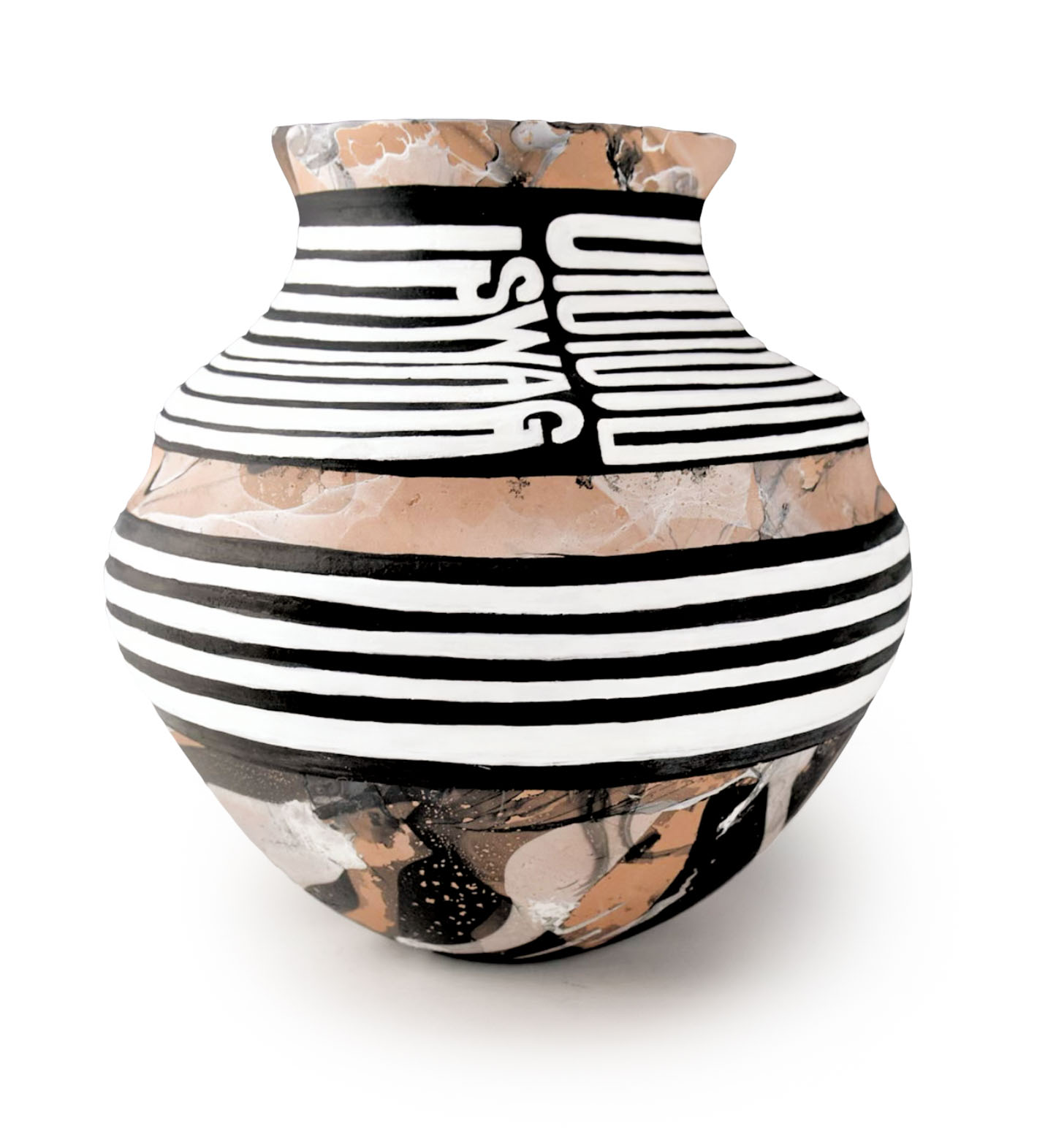 Kaa Folwell (Santa Clara Pueblo), Pueblo Swag, clay and paint, 10”
During our visit to Santa Clara Pueblo, Jody generously spoke about the profound role that pottery has played in her life since birth, often tying her stories to one of the countless pots that fill her home.
“Each pot is a book in itself,” she says as she moves through her collection. “I look at them and see they each have a story, a real story. We’re bringing a lot more than just pottery to the Booth Museum.”
The memories encapsulated in each pot offer enlightening insights into how traditional wisdom, handed down through generations, has helped guide the artistic progression of the Folwell family’s pottery practice.
“When I was small,” Jody reminisces, “I remember my grandmother making large pots from Santa Clara clay to store the maize we dried on the roof every autumn. Pots made from micaceous clay, which often came from Taos, were used for cooking. My grandmother taught my mother Rose to use different kinds of clay, then I learned to do the same. Now I’ve passed this on to my children and grandchildren.”
A versatile, open-minded approach that synthesizes tradition, adaptation and innovation has become a trademark of Folwell family art, due in no small part to the acclaim Jody has garnered for pushing the boundaries of contemporary Native American pottery.
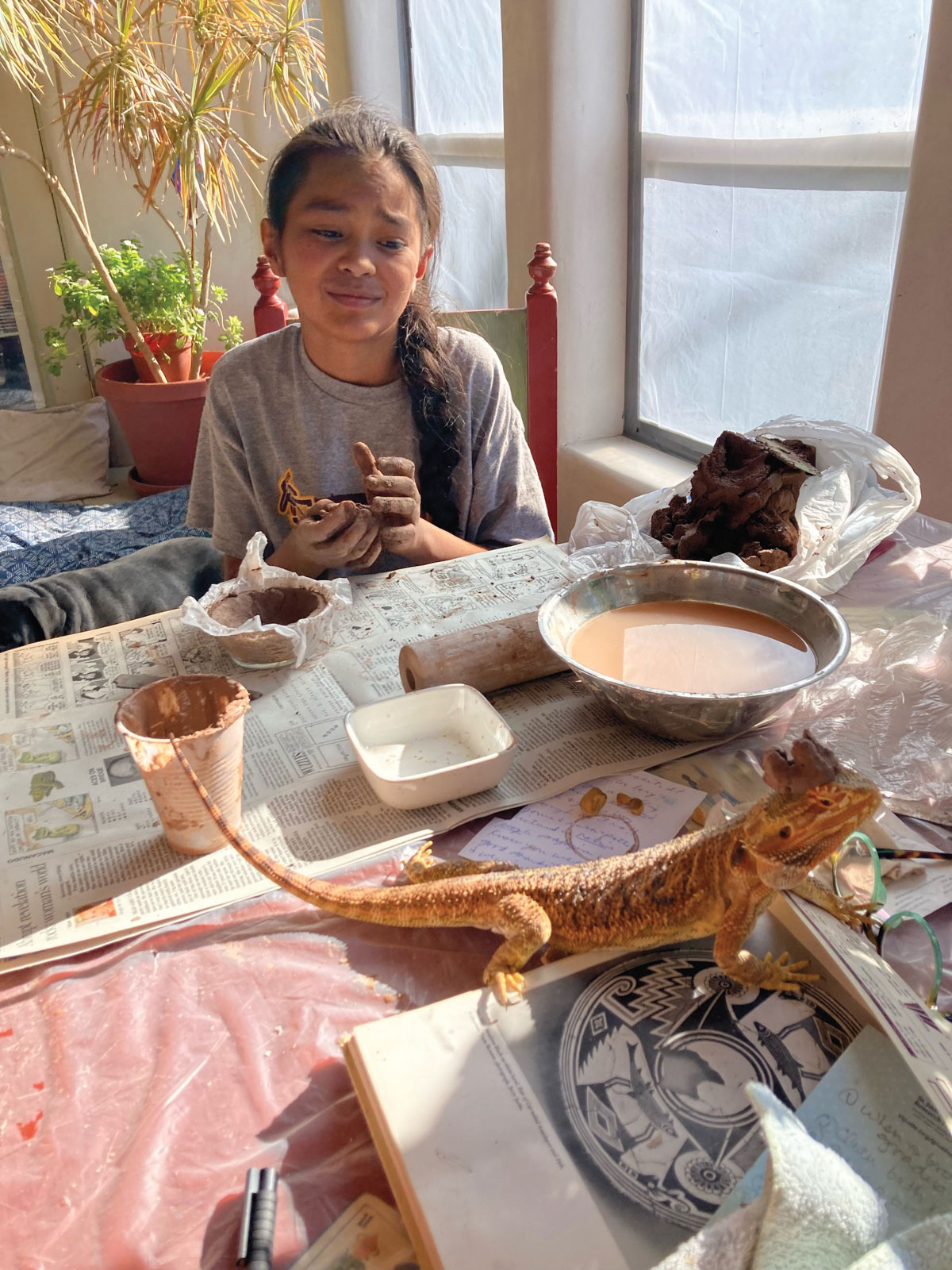 Tonka Folwell working with clay. Note the clay crown on his lizard.
“I draw inspiration from a wide range of sources,” Jody shares, “everything from Santa Clara customary designs to the ancient Mimbres, and even those of the Pacific Northwest. I do very traditional work, I do abstract work and I’ve also done many political and social commentary pieces throughout my career.”
Jody’s eldest daughter, Polly Rose Folwell, a seasoned gallerist as well as a lifelong potter with her own experimental flair, notes that the contemporary and avant-garde influences that characterize her mother’s career have had an impact that goes far beyond the family circle of potters.
“My mother paved the way for many contemporary pueblo potters. She has a strong, unapologetic nature as an artist, she’s action-oriented and prolific, and she has no issue expressing her opinions or creating however she wants. Her work has inspired not only all of us in the family but many others in the Native art world as well.”
Polly’s daughter, Kaa, a rising talent swiftly becoming known for her carved pottery inspired by graphic and graffiti art, agrees wholeheartedly.
“I don’t think there’s any other potter out there who creates within as broad a spectrum as my grandmother Jody,” Kaa says with pride. “When most potters find their style, they stick with it for their entire career. That’s what I love about my grandmother—one day she’ll do traditional, the next she’ll do contemporary, and some days she falls in between. She’s instilled that freedom in all of us, it’s become second nature.”
The Folwell family’s close-knit bond and collaborative spirit have proven vital to cultivating the growth of each individual’s creative pursuits. The family’s pottery tradition is deeply rooted, continually branching out and blossoming as brightly as ever. Reflecting on the nurturing influence of familial creativity, Polly Rose shares her perspective: “When you live your life with artists, there’s a thriving sense of creativity around you all the time. When you have parents, siblings and children working on art around you, your inner world will be more open to creating art without overthinking it. Avenues of applying your creativity are always open to you.”
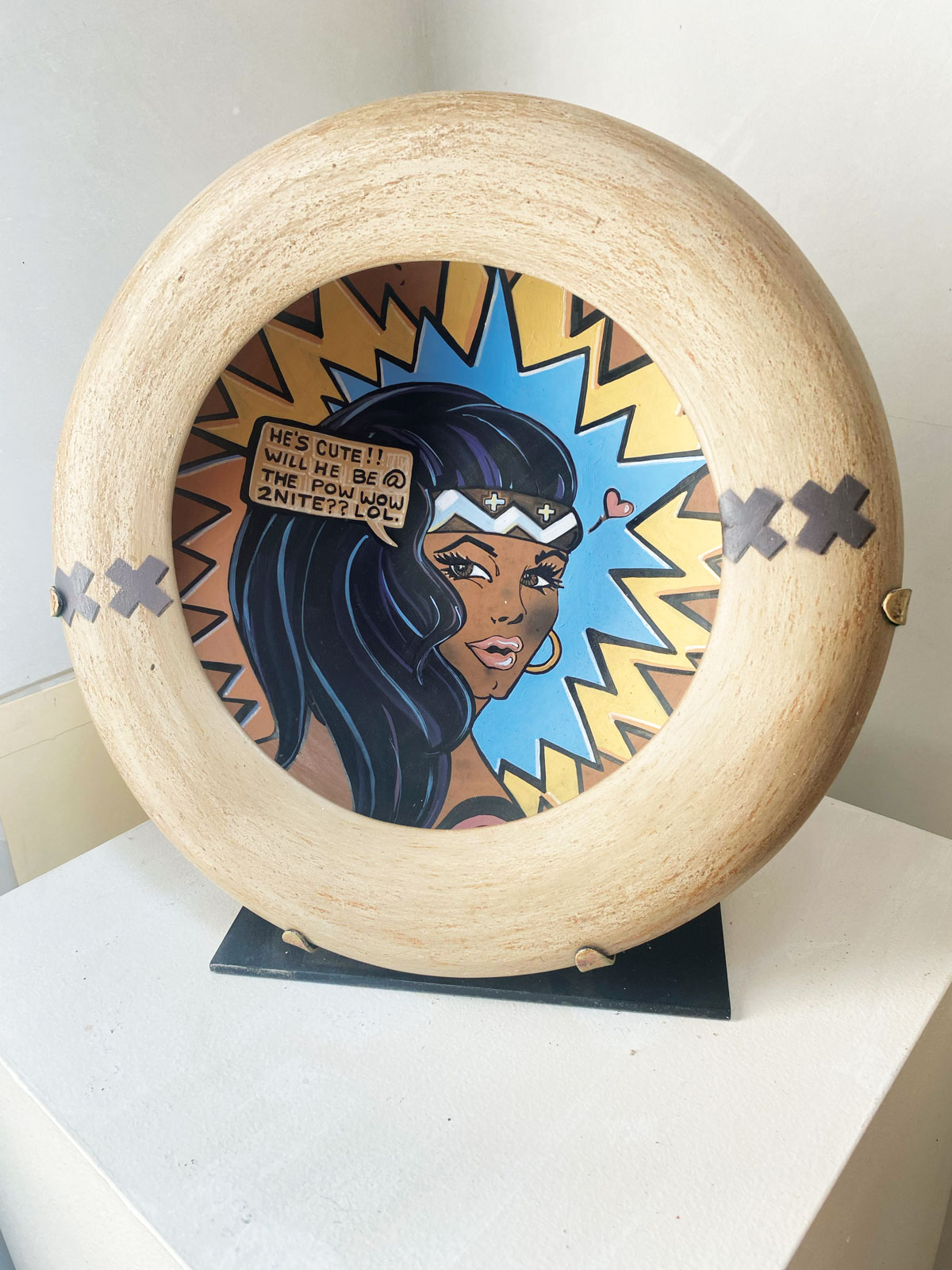 Susan Folwell (Santa Clara Pueblo), At the Pow Wow, clay, acrylic paint, 13”
This spirit of artistic passion lives on in the youngest generation of Folwells, embodied by Kaa’s eldest son, 12-year-old Tonka Jaguar Folwell, who has shown his pottery at markets in Phoenix and Santa Fe, and is well on his way to mastering the craft.
“Tonka has been making pottery for a long time now,” Polly says of her grandson. “He has his own ideas and structure for how he does his work and a powerful confidence that is beyond his years.”
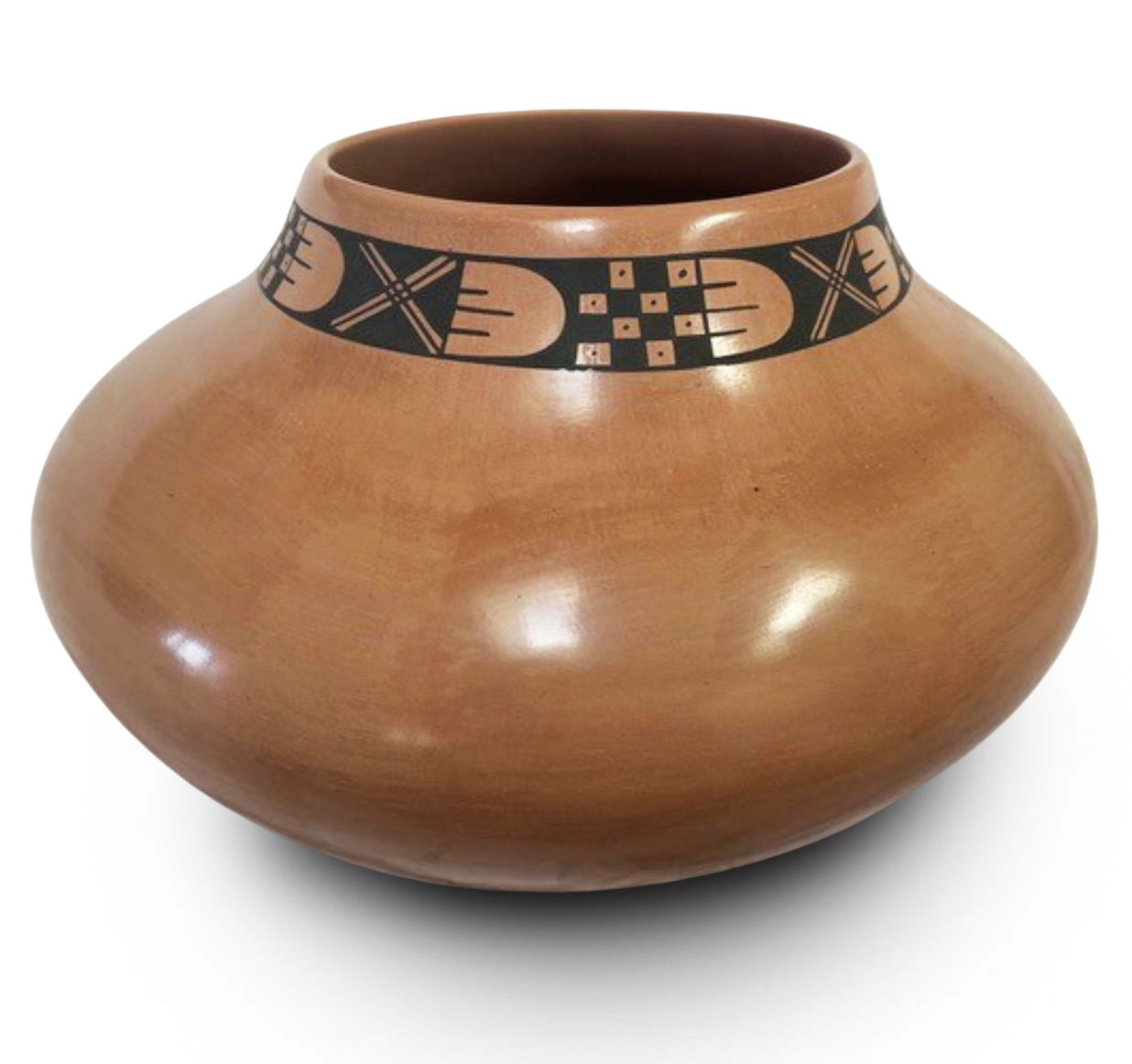 Jody Folwell (Santa Clara Pueblo), Untitled, clay, 11 x 18”
Reflecting on how pottery has been a part of her life as far back as she can remember, an experience shared through the generations from Rose Naranjo to her own children today, Kaa recounts: “As a kid, I thought most people made pottery. As I got older I began to realize how special and unique it is. It’s a privilege. Our lives revolve around pottery, literally and metaphorically. My grandmother’s kitchen table is the family studio. We do our work there, and when it’s time to eat, we eat around the pots. Clay is always at the center of our family, it connects us all together.”
The Folwell Family: 5 Generations of Potters stands as a rare and unforgettable experience, truly a once-in-multiple-lifetimes opportunity. After the exhibition opens on June 22, those unable to attend in person can explore a virtual tour available on the Booth Museum website. Additionally, they can tune in to stream the Folwells’ lecture and panel discussion scheduled for July 27 at 7 p.m. Eastern time.
The Folwell family and the museum staff alike hold high hopes for this exhibition and its cultural impact on Booth Museum’s wide audience.
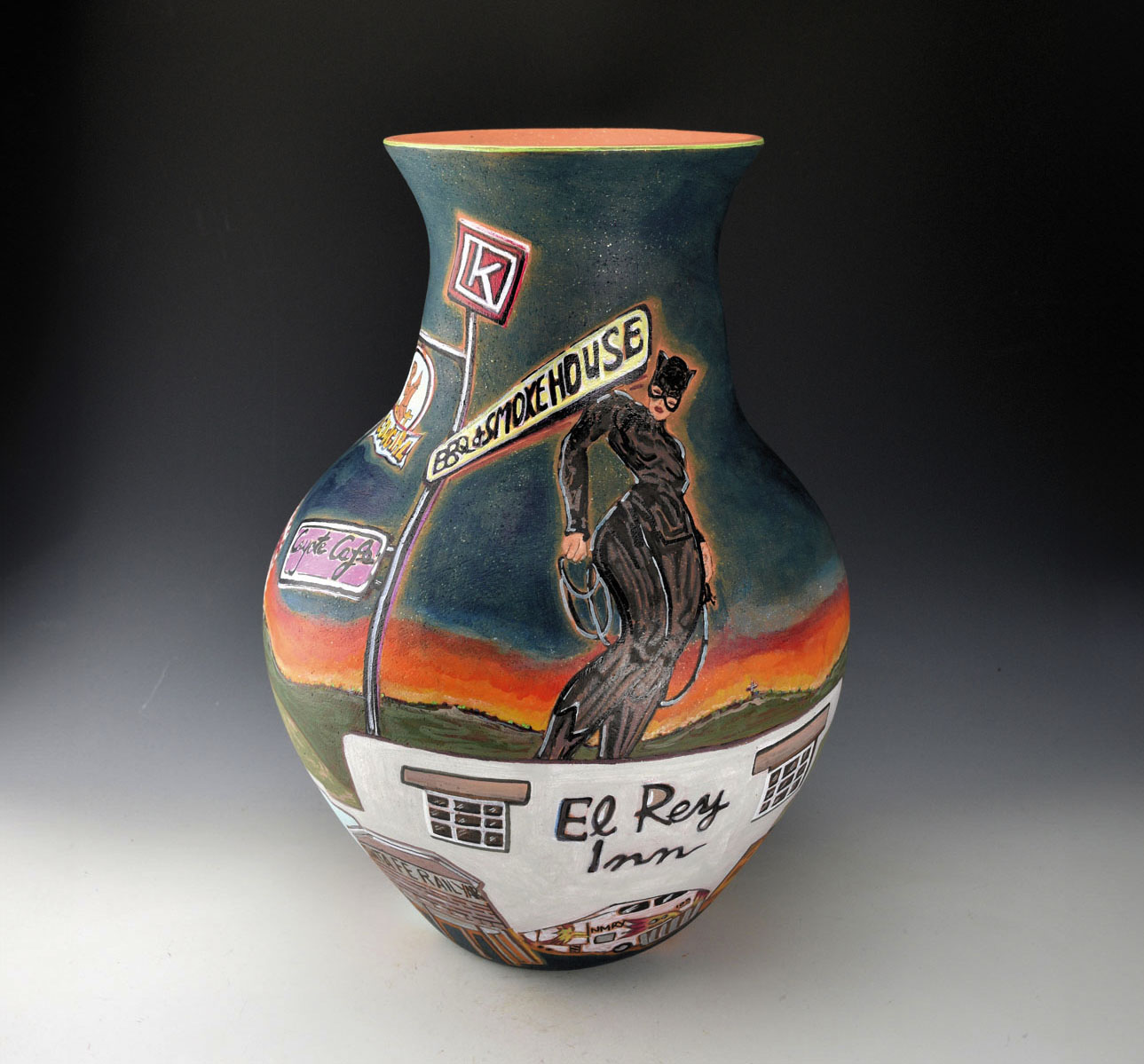 Susan Folwell (Santa Clara Pueblo), Saints and Sinners, clay, watercolor and India ink, 18”
As Susan emphasizes, “Native people have always worked as a collective, for the betterment of the group, and perhaps nothing represents that spirit better than pueblo pottery as a living art form. You get people fired up with traditional work, and soon they’ll be excited about contemporary work as well. We want people to see that contemporary pueblo potters can create outside the traditional loop while still honoring their heritage. We hope people come away from the exhibition with an enhanced understanding of what pueblo pottery is, and with the knowledge that it is still very much alive today.”
June 22-October 20, 2024
The Folwell Family: 5 Generations of Potters
Booth Western Art Museum
501 N. Museum Drive, Cartersville, GA 30120
(770) 387-1300, www.boothmuseum.org
Powered by Froala Editor


